International Women’s Day is a time to celebrate the achievements of women, but it’s also an opportunity to highlight important gender health inequalities that still exist. One issue that deserves more attention is the difference in survival rates between men and women who experience an out-of-hospital cardiac arrest.
Research published in the European Heart Journal has shown that women are less likely to survive cardiac arrest than men. Although some of this is down to biological factors, one key reason for this difference is that women are less likely to receive bystander CPR.
The study, led by cardiologist Dr Hanno Tan at the University of Amsterdam, found that 68% of women received bystander CPR compared with 73% of men. While this difference may seem small, when every minute counts in a cardiac arrest, it can have a significant impact on survival.
So why does this gap exist?
Why Women Are Less Likely to Receive CPR
1. Delayed Recognition
In many cases, cardiac arrest itself looks the same in men and women; the person collapses and stops breathing normally. However, the symptoms leading up to cardiac arrest can sometimes differ.
Women are more likely to experience symptoms such as:
- Unusual fatigue
- Nausea or vomiting
- Dizziness or fainting
- Neck, jaw or shoulder pain
Men, on the other hand, are more likely to report the classic symptom of severe chest pain.
Because these symptoms can appear less typical, they may not immediately be recognised as heart related. This highlights an important message taught in first aid training: if someone collapses and is not breathing normally, we should treat it as a cardiac arrest and start CPR immediately.
The guidance from Resuscitation Council UK is clear:
Check for normal breathing, call 999 and start CPR straight away.
2. Fear of Causing Harm
Research discussed by the British Heart Foundation suggests that some bystanders hesitate to start CPR on women because they worry about causing injury.
However, effective CPR requires the same technique for everyone.
First aid guidance states that chest compressions should be:
- In the centre of the chest
- 5–6 cm deep
- At a rate of 100–120 compressions per minute
This depth and force is necessary to circulate blood around the body. In other words, CPR must be performed the same way for men and women to give the best chance of survival. Your Guide to CPR | First Class First Aid
3. Fear of Causing Embarrassment
Another reported barrier is concern about touching or exposing a woman’s chest during a medical emergency.
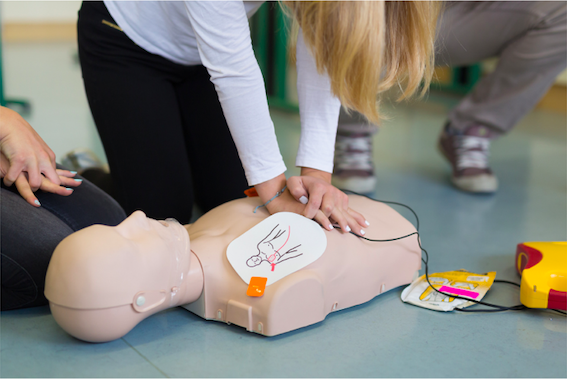
Defibrillators (AEDs) require pads to be placed directly on bare skin, and this means clothing, including bras, may need to be cut away to position the pads correctly. The pad placement diagrams on the defibrillator show exactly where they should go. You can read more about public access defibrillator use here: Public Access Defibrillators in Norfolk | First Class First Aid
In a cardiac arrest, restoring the heart’s rhythm with a defibrillator is one of the most important lifesaving interventions.
While concerns about dignity are understandable, in a life-threatening emergency saving the person’s life must come first. Once the pads are in place, dignity can easily be preserved by covering the casualty with a blanket or clothing.
The Importance of Stepping Forward
One of the most powerful ways we can close this survival gap is by empowering more people with the confidence to act.
Without immediate bystander CPR, the chances of survival from cardiac arrest are extremely low. By starting CPR and using a defibrillator, a bystander can double or even triple the chance of survival.
Some people also worry about legal consequences if they intervene. In the UK, the SARAH Act 2015 (Social Action, Responsibility and Heroism) offers reassurance to those who step in to help during emergencies. The law supports people who act in good faith when helping someone in danger.
In short, if someone is not breathing, doing something is always better than doing nothing.
Why First Aid Training Matters
Awareness is the first step, but confidence comes from training.
During first aid training, we openly discuss the fears and misconceptions that can stop people from helping. Having honest conversations about issues such as gender differences, dignity concerns and the confidence to act can make a huge difference in real emergencies.
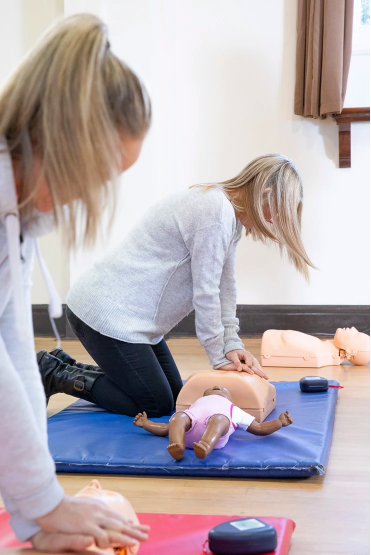
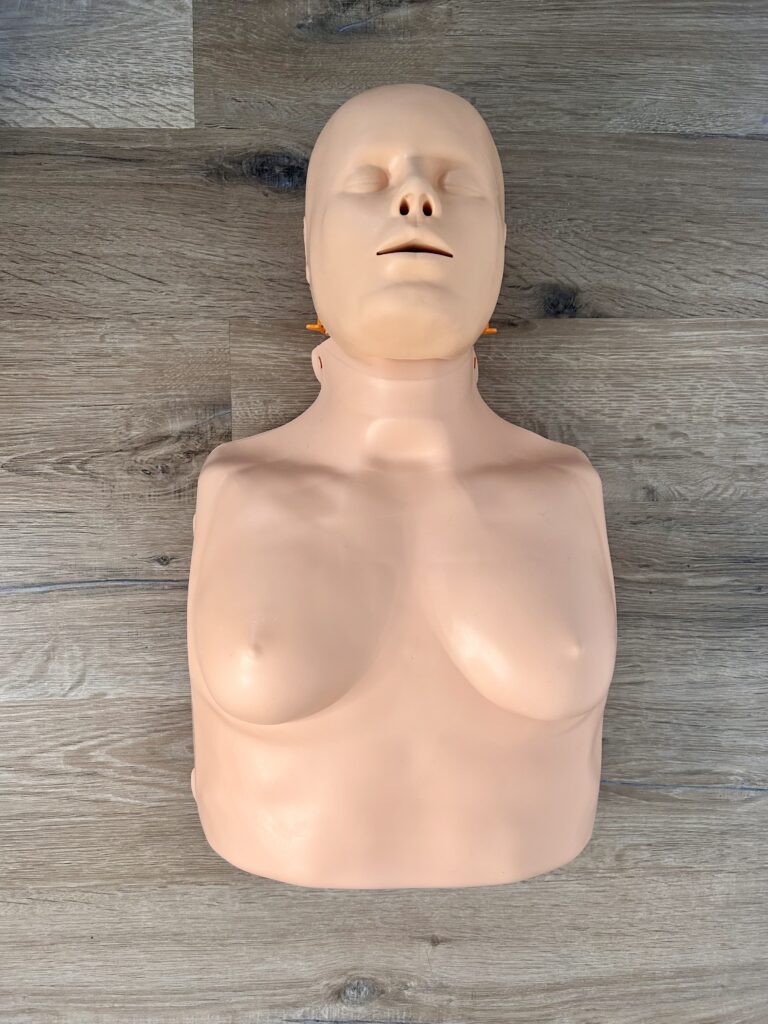
Practical training also helps build confidence. Many learners find that practising CPR on both standard and female CPR manikins helps them feel more prepared to respond to a cardiac arrest involving a woman.
By the end of training, learners often report feeling far more confident about:
- Recognising cardiac arrest
- Starting CPR immediately
- Using a defibrillator correctly
- Acting without hesitation
And that confidence could ultimately help save a life.
This International Women’s Day: Knowledge Saves Lives
On International Women’s Day, raising awareness about the cardiac arrest survival gap is an important reminder that everyone deserves the same chance of survival, regardless of gender.
Learning CPR and understanding how to respond quickly could mean the difference between life and death for someone in your community.
If you’d like to gain the knowledge and confidence to step forward in an emergency, first aid training is one of the most valuable skills you can learn.
To find out more about the courses available at First Class First Aid Ltd, or to book a place on an upcoming session, we’d love to hear from you. Together, we can help ensure that no one misses their chance of survival because help didn’t come quickly enough. First Aid Courses and Classes in Norfolk | First Class First Aid
Top of Form
Bottom of Form