Resuscitation guidance is regularly reviewed to reflect the latest evidence, research, and real-world experience. This in turn reflects how we respond to emergencies as First Aiders. The Resuscitation Council UK 2025 guidelines build on existing good practice, refining how we respond in those critical first moments to help save more lives.
As First Aiders, our training has been adjusted to align with the latest RCUK updates. Importantly, these updates don’t mean previous guidance was wrong. Instead, they focus on building on existing good practice to help us respond earlier, faster, and more effectively when it matters most.
What Has Changed?
One of the biggest updates is the move from:
DR ABC → DR C ABCDE
This change reflects three key priorities:
- Earlier activation of emergency services
- Immediate control of catastrophic bleeding
- A more complete assessment of the casualty
The New Primary Survey: DR C ABCDE
Here’s how the updated approach works in practice:
• D – Danger
- Ensure the scene is safe for you, the casualty, and others
- Look for hazards before approaching
• R – Response
- Check responsiveness using the ACVPU scale (Alert, Confused, Voice, Pain, Unresponsive)
- If unresponsive, call 999/112 immediately (112 is the EU wide emergency number)
- Ask a bystander to call if possible
- Put the phone on speaker (or ask the bystander to do this) to receive instructions while you help
• C – Catastrophic Bleeding (NEW PRIORITY)
- Check for severe, life-threatening bleeding straight away
- Signs of life-threatening bleeding: spurting, pouring or heavy uncontrolled bleeding.
- Act immediately:
- Apply direct pressure
- Use a tourniquet if trained
👉 This is a major shift: bleeding control now comes before airway and breathing
• A – Airway
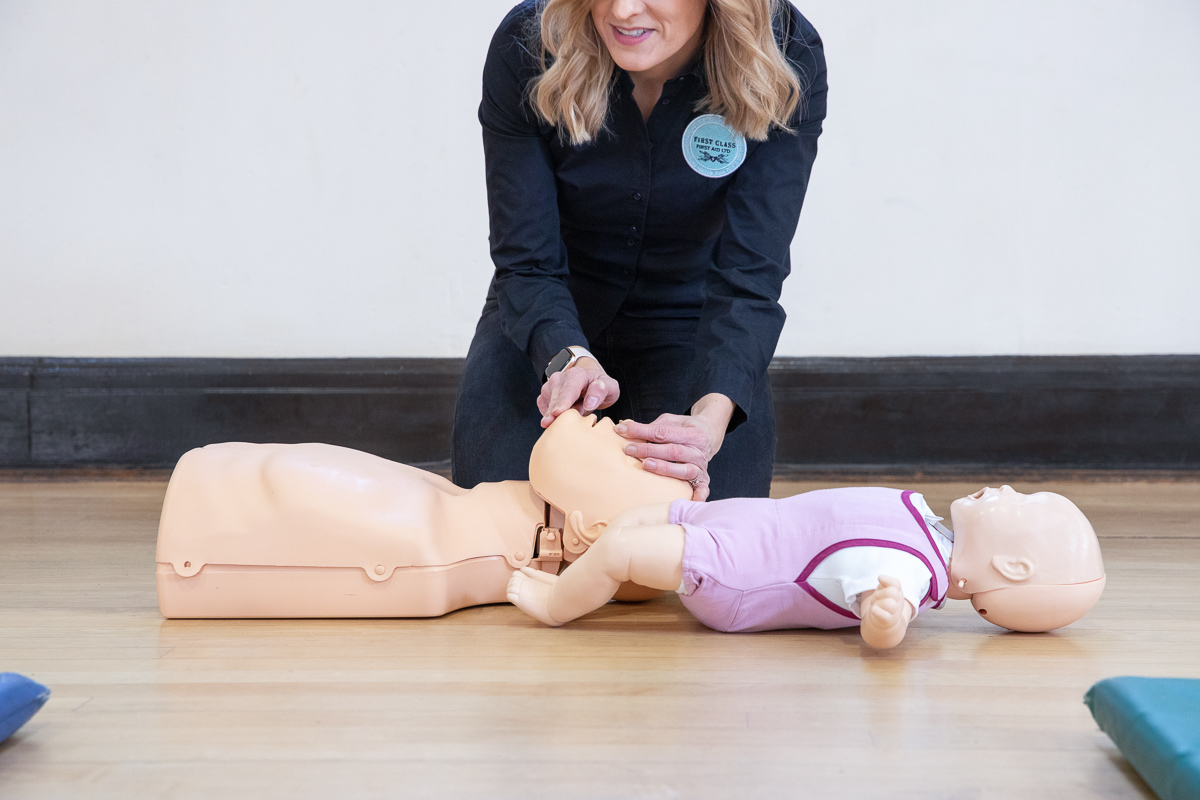
- Open and maintain a clear airway
- For casualties over the age of one year, use the head-tilt, chin-lift method. Place one hand on the forehead and two fingers on the tip of the chin. Gently tilt the head back to open the airway. Ensure the airway is open while checking for breathing.
• B – Breathing
- Check for normal breathing (no more than 10 seconds)
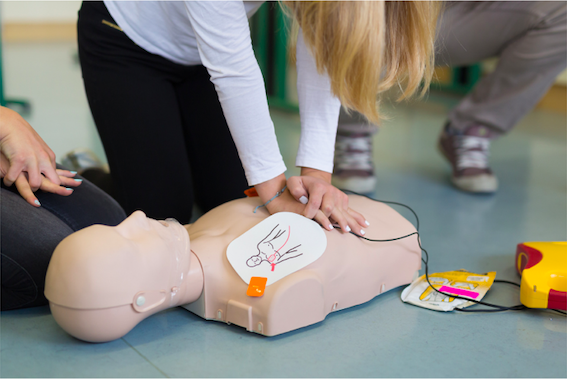
- If not breathing normally, start CPR immediately
• C – Circulation
- If the casualty is breathing look for:
- Signs of shock (pale, cold, clammy, breathing fast, confusion)
- Ongoing bleeding
- Treat as needed
- If there is no sign of spinal injury/major trauma the casualty can be placed in the recovery position to protect the airway. If there are signs of shock present, lay the casualty flat and raise the legs
• D – Disability (NEW)
Assess for neurological issues, including:
- Confusion or unusual behaviour
- Slurred speech
- Unequal pupils
- Weakness or numbness (especially on one side)
- Seizures
- Signs of stroke or head injury
• E – Exposure (NEW)
- Check for hidden injuries
- Look for:
- Burns, rashes, swelling
- Medical alert jewellery
- Prevent heat loss:
- Keep the casualty warm after checks
Early 999 Call: A Key Change
Another critical update is when to call for help.
Previously:
- Call after checking breathing
Now:
- Call as soon as the casualty is unresponsive
You should:
- Call before checking breathing
- Check breathing while on the phone on loudspeaker
- Follow instructions from the call handler
👉 This ensures help is on the way as early as possible, without delaying care
Using Call Handler Support
First aiders are now actively encouraged to:
- Put phones on speaker mode
- Follow real-time guidance from emergency call handlers
- Begin treatment while receiving support
This can make a huge difference, especially for less experienced first aiders.
Why This Update Matters
These changes are based on evidence showing that:
- Delays cost lives
- Severe bleeding needs immediate control
- Early emergency activation improves outcomes
- Structured assessment reduces missed injuries
By updating the primary survey, the Resuscitation Council UK is helping first aiders:
- Act faster
- Prioritise life-threatening conditions correctly
- Feel more confident in high-pressure situations
What This Means for First Aid Training
If you attend first aid courses, you’ll start to see:
- DR C ABCDE replacing DR ABC in manuals and teaching
- Greater emphasis on bleeding control skills
- Stronger focus on early emergency calls
- Inclusion of Disability and Exposure assessments
Final Thoughts
The move to DR C ABCDE is a practical, evidence-based evolution of first aid practice. It keeps what worked well but improves how we respond in those first crucial minutes.
For first aiders, the message is simple:
- Call early
- Control bleeding fast
- Follow a structured approach
Because in an emergency, what you do first really matters.
If you’re interested in first aid training we’d love to hear from you, contact us here First Aid Courses and Classes in Norfolk | First Class First Aid